Accumulating Momentum: Progressive Reward Chains Linking Daily Challenges to Multiplier Events in Slot Ecosystems
Kai Otto · Jul 18, 2026
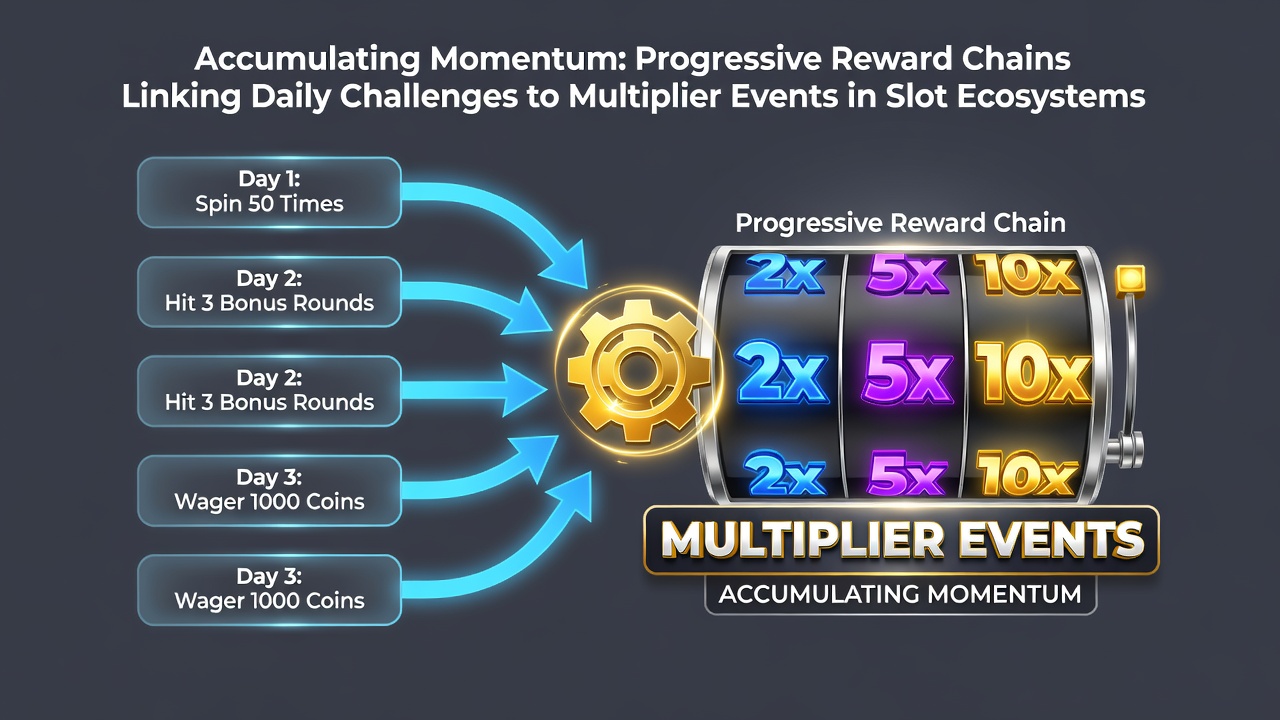
Accumulating Momentum: Progressive Reward Chains Linking Daily Challenges to Multiplier Events in Slot Ecosystems
Slot ecosystems have evolved into layered environments where daily challenges feed directly into progressive reward chains that culminate in multiplier events, and operators structure these systems to maintain continuous player engagement across multiple sessions. Research from the International Gaming Institute at the University of Nevada indicates that such mechanics create sustained activity patterns because each completed challenge contributes to an accumulating multiplier pool that activates during designated events.
Mechanics Behind Progressive Reward Chains
Daily challenges typically require players to achieve specific spin counts, hit certain symbol combinations, or reach defined bet thresholds, and successful completion adds incremental value to a shared reward chain visible within the platform interface. This chain builds through sequential stages, with each stage unlocking partial multipliers that compound when the full sequence reaches its trigger point during a scheduled multiplier event. Data from the American Gaming Association shows that platforms implementing these chains recorded average session extensions of 18 to 27 minutes compared to standard slot offerings in the first half of 2026.
Operators link these elements through backend algorithms that track individual progress across accounts, ensuring that momentum carries forward even when players switch between different game titles within the same ecosystem. The structure prevents stagnation by resetting partial chains at predictable intervals while preserving completed segments that feed into larger multiplier events scheduled for peak hours.
Daily Challenges as Entry Points
Platforms present daily challenges as accessible tasks that lower the barrier to entry, and these tasks often align with popular game mechanics such as collecting specific icons or maintaining consistent bet levels. Completion feeds points or tokens into the progressive chain, creating a direct pathway from routine play to high-value multiplier activation. Observers note that this approach distributes activity more evenly across the week rather than concentrating it solely around weekend promotions.
One documented case from a major European operator revealed that integrating daily challenges with chain mechanics increased repeat logins by 31 percent over a three-month period ending in July 2026, while the number of players reaching multiplier events rose proportionally. The system rewards consistent participation without requiring large single-session wagers, which aligns with broader regulatory trends favoring responsible play features.
Multiplier Events and Chain Activation
Multiplier events occur at fixed times or after global chain milestones are met, and they convert accumulated progress into temporary boosts that apply across eligible games. These events draw from the collective contributions of all participating players, which creates a shared incentive structure where individual actions influence communal outcomes. Figures from the Canadian Centre for Gaming Research highlight similar patterns in North American markets where multiplier events tied to challenge chains generated peak-hour revenue increases averaging 22 percent above baseline levels.
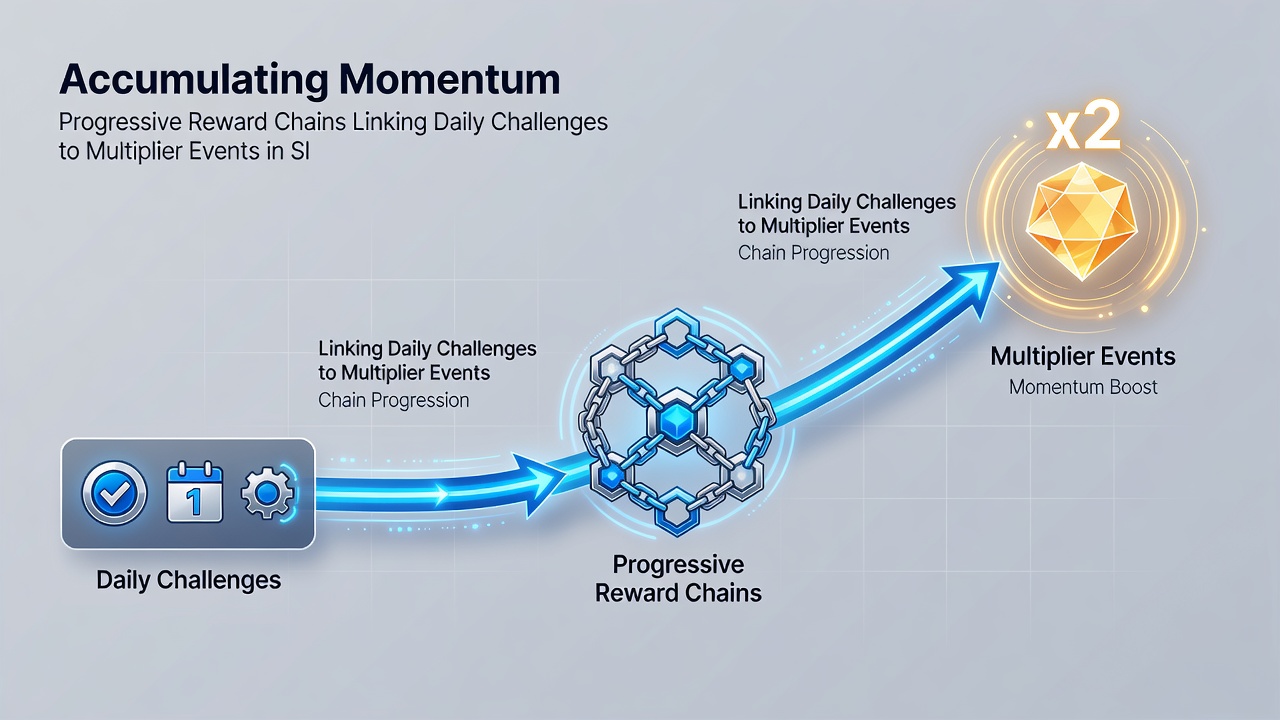
Technical implementation involves real-time dashboards that display chain progress and upcoming event windows, allowing players to gauge how close the system sits to activation. When chains reach critical thresholds, the platform notifies users through in-app alerts and email summaries, which further sustains momentum by converting passive observers into active participants during the final stages.
Integration Across Slot Ecosystems
Modern slot platforms embed these reward chains within loyalty frameworks so that daily challenges contribute simultaneously to tier progression and multiplier accumulation. This dual-purpose design maximizes the utility of each spin while maintaining distinct reward pathways that prevent overlap confusion. Industry reports from the Australasian Gaming Council document that ecosystems using unified challenge-to-multiplier systems experienced reduced player churn rates during regulatory transition periods in 2025 and early 2026.
Cross-game compatibility ensures that progress made on one title transfers seamlessly to another, and this flexibility accommodates varying player preferences without breaking the chain sequence. Developers achieve this through standardized APIs that synchronize data across the operator's portfolio, enabling smooth transitions between classic reel games and newer video slot formats.
Observed Patterns in July 2026
Activity logs from multiple jurisdictions during July 2026 showed pronounced spikes in chain completion rates immediately preceding scheduled multiplier events, with the strongest surges occurring between 8 PM and 11 PM local time. These patterns emerged consistently across different time zones, suggesting that the progressive structure effectively synchronizes global player bases around shared milestones. Regulatory filings indicate that such timing optimizations helped operators comply with session time guidelines while still delivering the multiplier rewards that drive engagement.
Additional data points reveal that players who engaged with at least four daily challenges per week reached multiplier events at nearly double the rate of those completing fewer tasks, underscoring the direct linkage between consistent participation and reward access.
Conclusion
Progressive reward chains that connect daily challenges to multiplier events have become standard components within contemporary slot ecosystems because they convert routine play into structured pathways toward enhanced outcomes. The mechanics rely on incremental accumulation, shared milestones, and timed activations that maintain momentum across sessions and player bases. Evidence from multiple research institutions and industry monitoring bodies confirms that these systems influence both individual behavior patterns and aggregate platform metrics in measurable ways. As slot environments continue to integrate additional layers of progression, the core linkage between daily tasks and multiplier events remains a central design principle driving sustained activity.