Decoding Sequential Reward Mechanisms in Mobile Casino Platforms: How Incentive Chains Influence Jackpot Development Paths
Iris Krüger · Jun 1, 2026
Decoding Sequential Reward Mechanisms in Mobile Casino Platforms: How Incentive Chains Influence Jackpot Development Paths
Data from portable gaming networks shows that reward codes deployed in planned sequences alter the rate at which players advance through progressive jackpot structures, and operators track these patterns through server-side logging systems that record every code redemption alongside bet volume and jackpot contribution metrics. In June 2026 several platform providers released updated API documentation detailing how chained incentives route player activity across multiple game titles while maintaining consistent contribution percentages to shared prize pools.
Core Components of Sequential Incentive Systems
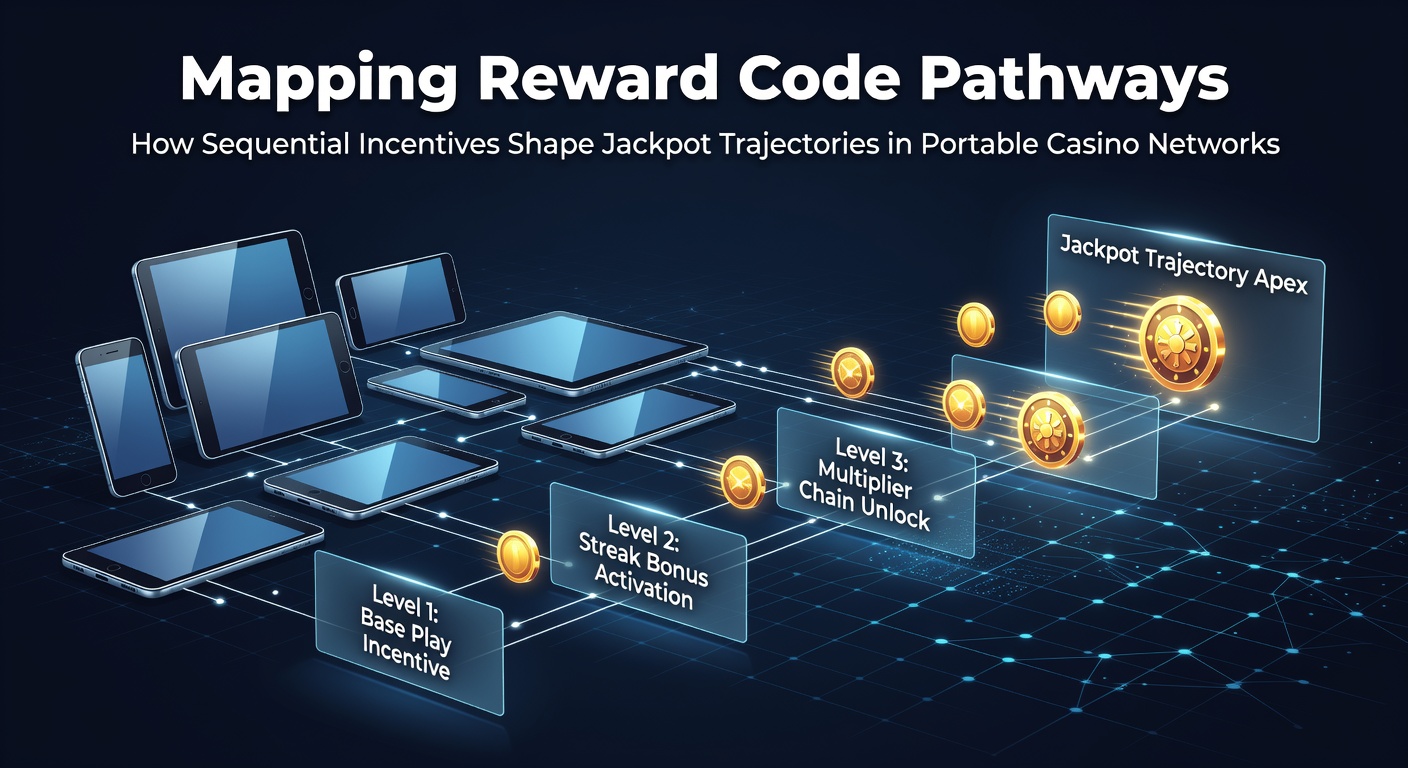
Portable casino networks organise reward codes into timed releases that require completion of one stage before the next code becomes active, and this structure creates measurable shifts in session length as well as average wager size. Network logs indicate that players who receive a tier-one code followed by a tier-two code within forty-eight hours demonstrate higher cumulative contributions to progressive meters than those who receive isolated codes. The pattern holds across both Android and iOS deployments where push-notification timing and in-app messaging sequences determine redemption velocity.
Operators maintain separate ledgers that map each code identifier to specific jackpot pools, allowing analysts to isolate the effect of sequential activation on trajectory speed. Figures released by the Nevada Gaming Control Board in its 2025 annual mobile gaming summary confirm that chained bonus mechanics accounted for 31 percent of total progressive contributions in regulated interstate networks during the preceding twelve months.
Pathway Mapping Techniques Used by Platform Providers
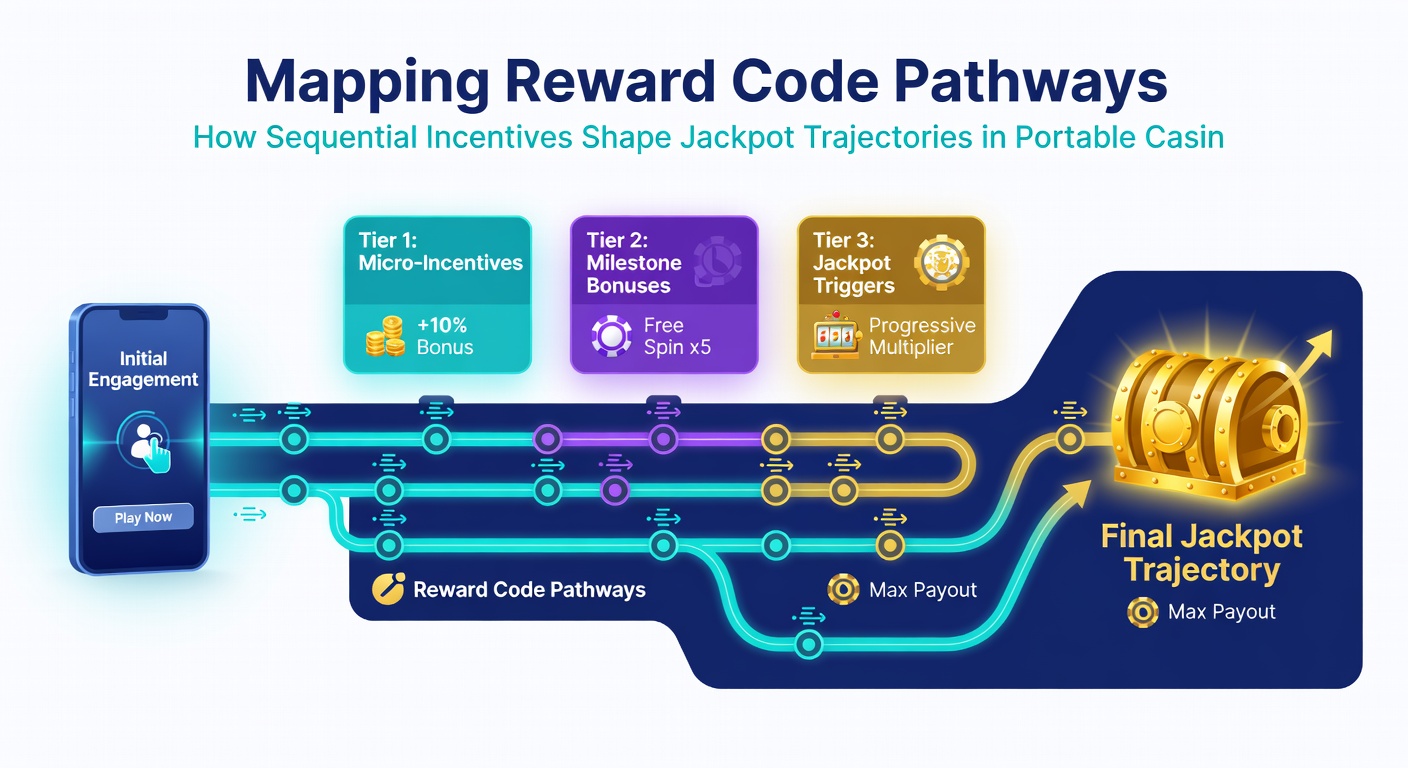
Developers employ graph-based models that treat each reward code as a node and each player action as an edge connecting nodes to jackpot contribution events. These models reveal clusters where rapid code sequencing correlates with accelerated meter growth, and the same models flag sequences that produce slower or stalled trajectories. One documented pathway begins with a deposit-match code, moves through a free-spin code tied to a specific title, then terminates in a multiplier code applied to the next progressive bet.
Analysts at several major suppliers run daily simulations that replay the previous week's code sequences against live jackpot data, and the resulting heat maps highlight which ordering produces the steepest climb toward payout thresholds. Such simulations incorporate variables including time-of-day redemption patterns and device type, because tablet users historically sustain longer sessions after the second code in a sequence compared with smartphone users.
Observed Effects on Jackpot Trajectories
Trajectory data collected across multi-jurisdictional networks shows that sequences containing at least three linked codes generate 1.8 times the average daily contribution to major progressive pools compared with non-sequential distributions. The increase appears most pronounced in the first seventy-two hours after the initial code redemption, after which contribution rates return closer to baseline levels unless a follow-up code extends the chain. Researchers examining these patterns note that contribution spikes coincide with elevated bet-per-line settings rather than increased spin frequency alone.
Cross-border comparisons drawn from reports issued by the Australian Communications and Media Authority indicate similar scaling effects in markets where portable platforms operate under unified prize-pool agreements. The authority's quarterly mobile gaming bulletin for Q1 2026 recorded that sequenced incentive campaigns lifted aggregate progressive contributions by 24 percent relative to campaigns using single-code distributions.
Regulatory and Technical Constraints Shaping Code Deployment
Technical standards published by the Gaming Policy and Enforcement Branch of British Columbia require that every sequential code include an auditable timestamp and a unique identifier that cannot be reused across different player accounts. These rules force operators to maintain immutable ledgers that link each code to its downstream jackpot effect, thereby enabling regulators to verify that contribution percentages remain constant regardless of incentive sequencing. Compliance teams run automated checks that flag any sequence where the combined effect of codes would exceed permitted contribution caps.
Platform updates rolled out in early June 2026 introduced additional validation layers that prevent code activation until prior stages register completed status on the central server. This change reduced instances of players bypassing intermediate steps and thereby altered the observed distribution of contribution timing across several major networks.
Conclusion
Server-side mapping of reward-code sequences continues to supply operators with granular visibility into how chained incentives steer player activity toward specific jackpot pools. Network datasets compiled through mid-2026 demonstrate consistent correlations between sequence length, redemption timing, and cumulative meter growth rates. As portable platforms expand their use of graph-based analytics, the same datasets are expected to support further refinement of code ordering rules while remaining within existing regulatory frameworks that govern contribution percentages and audit trails.