How Referral Chains Reshape Access Pathways to Cumulative Prize Pools in Portable Reel Systems
Erik Krüger · Jun 29, 2026

Referral Chains Reshape Entry Routes to Collective Jackpot Systems in Portable Reel Technologies
Referral programs operate through structured invitation sequences where existing participants extend access codes to new users, and each successful registration contributes incremental value to aggregated reward structures. Portable reel systems, which run on handheld devices, integrate these sequences directly into their core mechanics so that cumulative prize pools expand based on verified chain activity rather than isolated play sessions alone. Data from industry tracking services show that such chains create layered entry points, allowing participants deeper into bonus tiers once a minimum number of referrals complete registration and initial deposits. Platform operators design these pathways so that each referral link carries a multiplier effect on the overall pool size. When one user invites another, the system records the connection, and subsequent activity from the new participant feeds back into the shared accumulation. Observers note that this creates a compounding structure where longer chains produce larger accessible portions of the prize fund at earlier stages of individual engagement. In June 2026 several operators updated their mobile applications to display real-time chain progress indicators, making the relationship between referrals and pool growth visible to participants during active sessions. Technical implementation relies on unique tracking identifiers embedded in referral links that persist across device types. Portable reel platforms use server-side verification to confirm each new account belongs to the chain before allocating the corresponding share of the cumulative pool. This process prevents duplicate claims while maintaining accurate contribution records. Research from university gaming laboratories indicates that systems employing persistent identifiers achieve higher retention rates within referral networks compared with platforms that rely solely on one-time bonuses. Access pathways evolve as chains lengthen because operators adjust threshold requirements dynamically. Early participants in a chain may reach higher prize tiers after only two or three successful referrals, whereas later joiners encounter progressively higher benchmarks tied to total chain volume. Such adjustments maintain balance across the network while ensuring the cumulative pool continues to grow through sustained activity. Figures from North American gaming regulators reveal that referral-linked prize pools accounted for an increasing share of total mobile slot payouts during the first half of 2026. Security protocols within these systems include identity verification steps triggered at each chain extension point. Portable reel applications prompt new users to complete standard account validation before the referral credit applies to the shared pool. This step reduces fraudulent chain creation while preserving legitimate growth. Industry reports from the Canadian Gaming Association highlight that verified referral structures correlate with steadier prize pool expansion across multiple jurisdictions. Chain depth influences both individual access speed and collective pool size in measurable ways. Shorter chains tend to unlock modest portions of the prize fund quickly, while extended networks distribute larger segments over time. Platform analytics demonstrate that users who participate in chains exceeding five verified referrals gain entry to multiplier stages unavailable through standard play. Those who've studied mobile gaming patterns observe that the relationship between chain length and reward tier remains consistent across different portable reel titles. Geographic variations appear in how operators structure these pathways. Regions with mature mobile gaming markets often feature referral chains that integrate with loyalty programs, allowing accumulated points from referrals to convert directly into additional pool contributions. In contrast, emerging markets emphasize simpler invitation mechanics that focus on initial registration volume before introducing tiered access. Data collected by the Victorian Commission for Gambling and Liquor Regulation in Australia shows regional differences in chain completion rates that align with local regulatory frameworks. Developers continue to refine the integration between referral tracking and prize pool algorithms in portable environments. Updates released during the spring of 2026 introduced predictive modeling that estimates future pool growth based on current chain momentum. These models help operators set realistic access thresholds without overextending available funds. The resulting pathways maintain transparency so participants can track their position within the larger network through in-app dashboards. 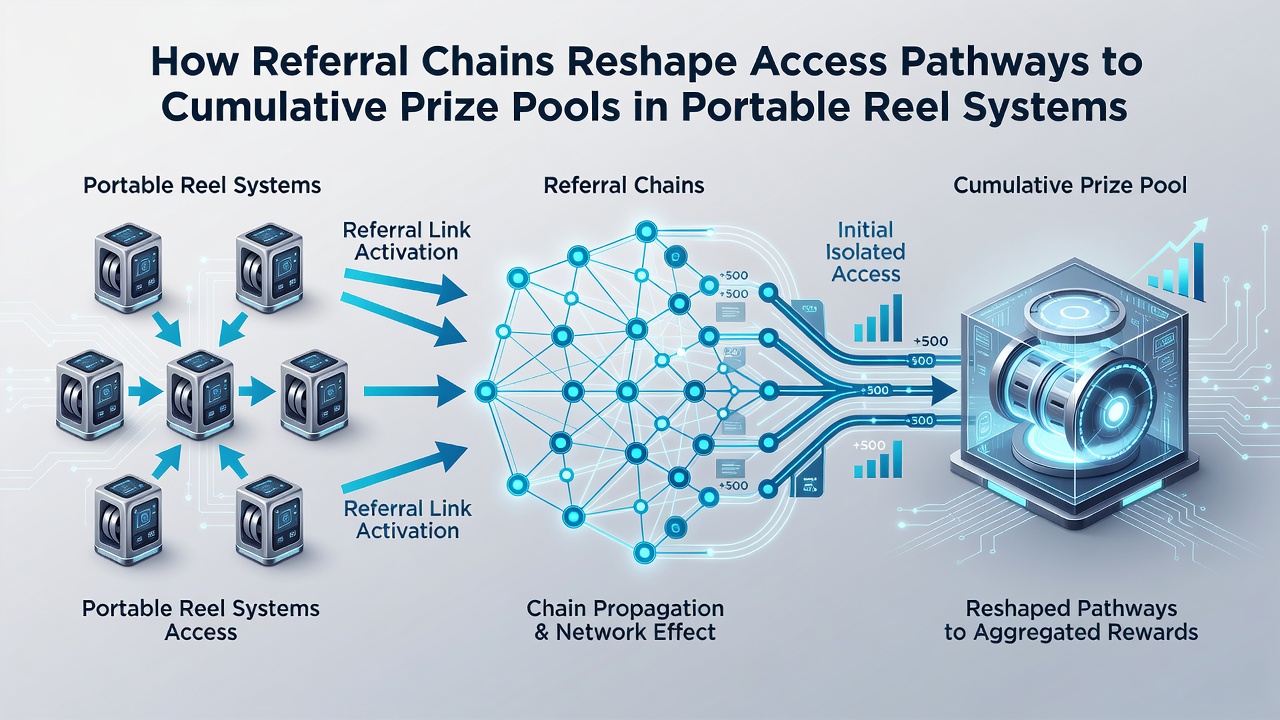 Further refinements include cross-device synchronization that preserves chain history when users switch between phones and tablets. This continuity ensures that referral contributions remain credited regardless of hardware changes. Technical documentation from major platform providers confirms that synchronization occurs through encrypted tokens that maintain privacy standards while supporting accurate pool calculations. Operators also monitor chain health through metrics such as completion velocity and drop-off points. When chains stall at particular stages, automated prompts encourage further invitations without altering the underlying access rules. Such interventions help sustain momentum toward the higher prize tiers that require greater network participation. Studies from gaming research centers indicate that active chain management correlates with steadier growth in cumulative prize pools over quarterly periods. Referral chains therefore function as dynamic routing mechanisms that determine when and how participants reach different segments of shared prize funds. The structure rewards network expansion while enforcing verification steps that protect pool integrity across portable reel systems. As mobile platforms evolve, these pathways continue to adapt through incremental technical adjustments that reflect both user behavior patterns and regulatory requirements in various markets. Conclusion
Referral chains establish measurable connections between individual invitations and collective prize pool access within portable reel systems. The documented mechanics show consistent patterns across regions and device types, with verification processes and dynamic thresholds shaping entry points at every stage. Continued platform updates maintain these relationships while supporting transparent tracking for all participants involved in the networks.
Further refinements include cross-device synchronization that preserves chain history when users switch between phones and tablets. This continuity ensures that referral contributions remain credited regardless of hardware changes. Technical documentation from major platform providers confirms that synchronization occurs through encrypted tokens that maintain privacy standards while supporting accurate pool calculations. Operators also monitor chain health through metrics such as completion velocity and drop-off points. When chains stall at particular stages, automated prompts encourage further invitations without altering the underlying access rules. Such interventions help sustain momentum toward the higher prize tiers that require greater network participation. Studies from gaming research centers indicate that active chain management correlates with steadier growth in cumulative prize pools over quarterly periods. Referral chains therefore function as dynamic routing mechanisms that determine when and how participants reach different segments of shared prize funds. The structure rewards network expansion while enforcing verification steps that protect pool integrity across portable reel systems. As mobile platforms evolve, these pathways continue to adapt through incremental technical adjustments that reflect both user behavior patterns and regulatory requirements in various markets. Conclusion
Referral chains establish measurable connections between individual invitations and collective prize pool access within portable reel systems. The documented mechanics show consistent patterns across regions and device types, with verification processes and dynamic thresholds shaping entry points at every stage. Continued platform updates maintain these relationships while supporting transparent tracking for all participants involved in the networks.
Referral programs operate through structured invitation sequences where existing participants extend access codes to new users, and each successful registration contributes incremental value to aggregated reward structures. Portable reel systems, which run on handheld devices, integrate these sequences directly into their core mechanics so that cumulative prize pools expand based on verified chain activity rather than isolated play sessions alone. Data from industry tracking services show that such chains create layered entry points, allowing participants deeper into bonus tiers once a minimum number of referrals complete registration and initial deposits. Platform operators design these pathways so that each referral link carries a multiplier effect on the overall pool size. When one user invites another, the system records the connection, and subsequent activity from the new participant feeds back into the shared accumulation. Observers note that this creates a compounding structure where longer chains produce larger accessible portions of the prize fund at earlier stages of individual engagement. In June 2026 several operators updated their mobile applications to display real-time chain progress indicators, making the relationship between referrals and pool growth visible to participants during active sessions. Technical implementation relies on unique tracking identifiers embedded in referral links that persist across device types. Portable reel platforms use server-side verification to confirm each new account belongs to the chain before allocating the corresponding share of the cumulative pool. This process prevents duplicate claims while maintaining accurate contribution records. Research from university gaming laboratories indicates that systems employing persistent identifiers achieve higher retention rates within referral networks compared with platforms that rely solely on one-time bonuses. Access pathways evolve as chains lengthen because operators adjust threshold requirements dynamically. Early participants in a chain may reach higher prize tiers after only two or three successful referrals, whereas later joiners encounter progressively higher benchmarks tied to total chain volume. Such adjustments maintain balance across the network while ensuring the cumulative pool continues to grow through sustained activity. Figures from North American gaming regulators reveal that referral-linked prize pools accounted for an increasing share of total mobile slot payouts during the first half of 2026. Security protocols within these systems include identity verification steps triggered at each chain extension point. Portable reel applications prompt new users to complete standard account validation before the referral credit applies to the shared pool. This step reduces fraudulent chain creation while preserving legitimate growth. Industry reports from the Canadian Gaming Association highlight that verified referral structures correlate with steadier prize pool expansion across multiple jurisdictions. Chain depth influences both individual access speed and collective pool size in measurable ways. Shorter chains tend to unlock modest portions of the prize fund quickly, while extended networks distribute larger segments over time. Platform analytics demonstrate that users who participate in chains exceeding five verified referrals gain entry to multiplier stages unavailable through standard play. Those who've studied mobile gaming patterns observe that the relationship between chain length and reward tier remains consistent across different portable reel titles. Geographic variations appear in how operators structure these pathways. Regions with mature mobile gaming markets often feature referral chains that integrate with loyalty programs, allowing accumulated points from referrals to convert directly into additional pool contributions. In contrast, emerging markets emphasize simpler invitation mechanics that focus on initial registration volume before introducing tiered access. Data collected by the Victorian Commission for Gambling and Liquor Regulation in Australia shows regional differences in chain completion rates that align with local regulatory frameworks. Developers continue to refine the integration between referral tracking and prize pool algorithms in portable environments. Updates released during the spring of 2026 introduced predictive modeling that estimates future pool growth based on current chain momentum. These models help operators set realistic access thresholds without overextending available funds. The resulting pathways maintain transparency so participants can track their position within the larger network through in-app dashboards.
Further refinements include cross-device synchronization that preserves chain history when users switch between phones and tablets. This continuity ensures that referral contributions remain credited regardless of hardware changes. Technical documentation from major platform providers confirms that synchronization occurs through encrypted tokens that maintain privacy standards while supporting accurate pool calculations. Operators also monitor chain health through metrics such as completion velocity and drop-off points. When chains stall at particular stages, automated prompts encourage further invitations without altering the underlying access rules. Such interventions help sustain momentum toward the higher prize tiers that require greater network participation. Studies from gaming research centers indicate that active chain management correlates with steadier growth in cumulative prize pools over quarterly periods. Referral chains therefore function as dynamic routing mechanisms that determine when and how participants reach different segments of shared prize funds. The structure rewards network expansion while enforcing verification steps that protect pool integrity across portable reel systems. As mobile platforms evolve, these pathways continue to adapt through incremental technical adjustments that reflect both user behavior patterns and regulatory requirements in various markets. Conclusion
Referral chains establish measurable connections between individual invitations and collective prize pool access within portable reel systems. The documented mechanics show consistent patterns across regions and device types, with verification processes and dynamic thresholds shaping entry points at every stage. Continued platform updates maintain these relationships while supporting transparent tracking for all participants involved in the networks.