Tracing Incentive Flows in Mobile Reel Systems From Entry Offers to Scaled Rewards
Klara Werner · Jun 6, 2026

Tracing Incentive Flows in Mobile Reel Systems From Entry Offers to Scaled Rewards
Portable reel platforms operate through layered reward structures that convert early incentives into sustained engagement cycles and eventual larger distributions, with data from regulatory bodies such as the New Jersey Division of Gaming Enforcement showing consistent patterns across licensed mobile operators in 2026. These systems begin with entry-level triggers like deposit matches or free credit allocations that introduce players to core mechanics, then advance through accumulated metrics such as play volume and session frequency that unlock intermediate tiers.
Entry-Level Incentive Structures
Initial offers typically activate upon account creation or first deposit, delivering fixed credit amounts or spin packages that allow immediate interaction with reel mechanics while establishing baseline tracking for future progression. Operators integrate these starters into unified accounts that monitor every wager and outcome, feeding data directly into algorithms that adjust subsequent availability based on individual activity thresholds. Research from the University of Nevada's gaming studies program indicates that such entry points correlate with higher retention rates in the first thirty days, because the immediate access lowers barriers and sets the stage for metric-based escalations.
Platforms maintain separate ledgers for promotional balances versus cash equivalents, ensuring that early incentives remain distinct until wagering conditions clear, at which point converted funds enter the main balance and contribute toward loyalty milestones. This separation prevents premature cash-out while guiding users along defined routes toward higher-value rewards.
Progressive Tier Advancement
Once initial credits circulate through the reels, activity logs trigger tier upgrades that expand reward multipliers, add exclusive game access, or introduce cashback percentages scaled to recent volume. Portable applications display these tiers through visual progress bars and notification systems that update in real time, keeping users informed of proximity to the next level without requiring external checks. Data compiled by the Canadian Gaming Association reveals that operators employing visible progression indicators record steadier session lengths across Android and iOS deployments, because the visible feedback loop reinforces continued participation.
Intermediate stages often incorporate time-limited events or streak bonuses that reset or accumulate depending on consecutive daily logins, creating secondary pathways that intersect with the primary volume-based route. These intersections multiply opportunities for reward acceleration, allowing a single high-volume period to satisfy multiple criteria simultaneously and push accounts toward premium segments faster.
Transition to Progressive Payout Mechanisms
As accounts advance, reward pathways converge on progressive jackpot pools that draw contributions from every qualifying wager across connected mobile titles, with seed amounts and increment rates published transparently in platform rules. Portable reel engines allocate a fixed percentage of each bet into these shared pots, while individual player eligibility depends on maintaining active tier status and meeting minimum wager thresholds during the contribution window. Figures released by the Nevada Gaming Control Board in June 2026 documented rising participation in such pooled systems on mobile channels, noting that the largest recorded mobile-triggered progressives that quarter exceeded previous desktop-only benchmarks by measurable margins.
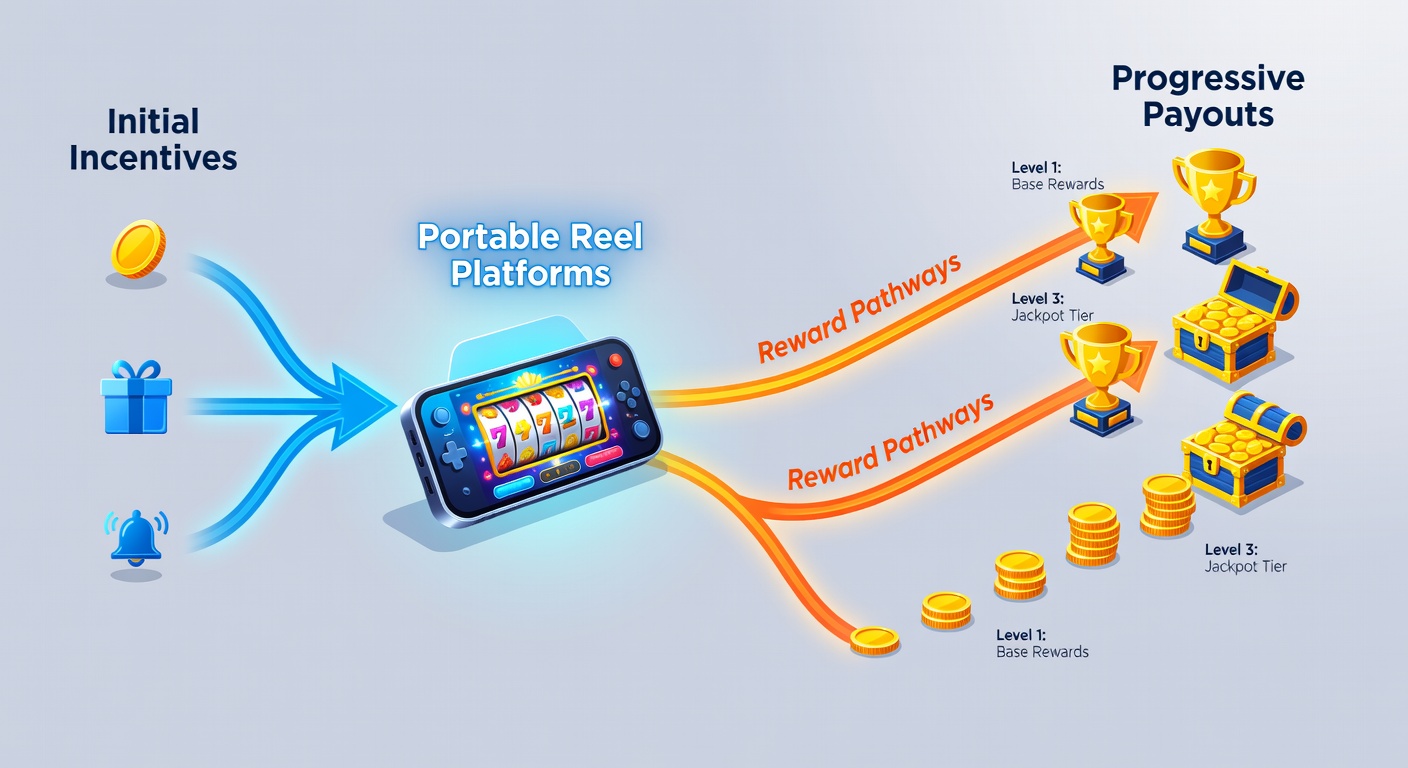
Final payout triggers occur when random number generators align with pool-specific conditions, at which point the system distributes the accumulated total according to predefined formulas that factor in the player's contribution history and current tier multiplier. The entire sequence from first incentive to potential jackpot draw remains logged within encrypted session records, allowing both operators and regulators to audit pathway integrity from start to finish.
Platform-Specific Enablers
Mobile architectures support these reward flows through push notifications that alert users to tier upgrades or pool growth milestones, alongside seamless wallet integrations that move converted balances between promotional and withdrawable categories without manual intervention. Backend servers synchronize across devices so that progress achieved on one handset carries forward instantly when a user switches to another, maintaining continuity regardless of hardware changes. Industry reports from the Responsible Gambling Council in Canada highlight how these technical features reduce friction points that previously interrupted reward accumulation in earlier-generation applications.
Security layers embedded at the application level verify each transaction against responsible play parameters before crediting rewards, ensuring that automated pathways respect jurisdictional spending limits while still permitting organic progression for compliant accounts. This balance allows the mapping of incentives to remain both engaging and compliant across multiple regulatory environments simultaneously.
Conclusion
The complete reward pathway in portable reel platforms forms a continuous chain where entry incentives feed directly into tiered tracking systems that ultimately feed progressive pools, with each stage documented through timestamped data streams accessible to oversight agencies. Observers tracking June 2026 activity note continued refinement of these connections as operators optimize mobile interfaces for clearer visibility into upcoming thresholds and pool statuses. Such structures demonstrate how initial offers evolve systematically into scaled opportunities without requiring separate promotional campaigns at every step.